
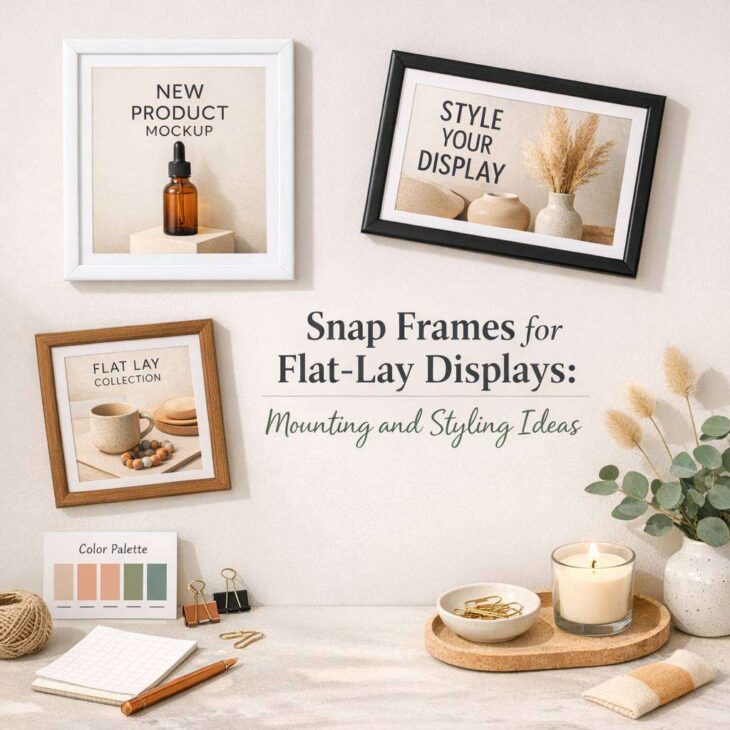
Snap Frames for Flat-Lay Displays: Mounting and Styling Ideas
Flat-lay photography has become a staple for product showcases, fashion spreads, and lifestyle branding. One humble yet highly effective tool for achieving crisp, professional results is the snap frame. Designed to hold artwork, prints, or props securely while remaining quick to swap, snap frames are invaluable for updating displays without fuss. Here, we explore how to choose, mount, and style snap frames for flawless flat-lay setups.
What is a snap frame?
A snap frame is a lightweight yet sturdy frame that uses a clamping mechanism to secure a sheet of material—typically paper, card, or photographic prints—between front and back panels. The front often features a polycarbonate or glass face for protection, while the backboard keeps the content taut. The distinctive feature is the ease with which the front cover can be snapped open and closed, allowing rapid changes to the display. Snap frames come in a variety of sizes, finishes, and depths, making them adaptable to many flat-lay themes.
Snap frames offer a simple, versatile way to display art, photos, and certificates with a clean, modern finish. Ideal for homes, classrooms, and offices, they protect visuals while enabling quick updates. For stylish display solutions, explore a curated range at snap frames.
Choosing the right snap frame for flat-lay displays
When selecting snap frames for flat-lay work, consider:
- Size and aspect ratio: Match the frame to your primary flat-lay material. Popular sizes include A4, A5, 8×10 inches, and 11×14 inches. For Instagram-ready flat-lays, neutral margins and clean lines help keep the focus on the items.
- Depth and profile: A shallow profile keeps the frame unobtrusive in a busy shot, while a deeper frame can accommodate layered props or backing materials.
- Material and finish: Black, white, or natural timber finishes are versatile and photograph well against a range of backgrounds. For a cohesive brand look, select a frame finish that complements your product photography palette.
- Durability: If frames will be handled frequently or shipped as part of a kit, choose rigid frames with secure clipping mechanisms and anti-reflective front protection to reduce glare.
- Mounting options: Some snap frames are designed for wall mounting, while tabletop or stand-alone variants are available for horizontal flat-lays. Consider whether you need freestanding frames or wall-mounted units to suit your studio setup.
Mounting snap frames for flat-lay photography
Proper mounting ensures your flat-lays look balanced and professional. Here are practical guidance tips:
- Use a clean, clutter-free surface: A plain backdrop—such as a neutral paper or fabric—helps the frame stand out and prevents distractions in the shot.
- Position for vantage: For still-life shots, mount frames slightly above or to the side of the main surface to avoid glare. A 10–15 degree tilt can help reduce reflections on the front glass.
- Stabilise frames: If you’re shooting on a reflective table, place the frame on a non-slip mat or use a light-weight stand to prevent movement during capture.
- Backing material matters: Use high-quality backing behind the frame to prevent warping or bending. A matt board or foam board helps keep the content crisp and flat.
- Lighting considerations: Use diffuse, even lighting to minimise hotspots. A white bounce card placed nearby can help fill shadows without altering the frame’s appearance.
- Clip and secure gently: When adding or swapping content, snap frames should open smoothly without excessive force. Avoid over-tightening the front lip, which can damage delicate prints.
Styling ideas for flat-lay with snap frames
The beauty of snap frames lies in their quick-change versatility. Consider these styling approaches:
- Monochrome minimalism: Choose a single colour palette and place a striking item inside the snap frame—perhaps a typography print or a monochrome illustration. Surround with subtle props in varying textures to maintain visual interest without overpowering the frame.
- Thematic narratives: Build a small vignette around the frame. For example, pair a framed art print with related objects—stationery, fabric swatches, and a colour-matched accessory—to tell a cohesive story.
- Layered textures: Use different materials behind the frame to create depth in a flat-lay. A textured board, cork, or terrazzo surface can provide contrast while the frame anchors the composition.
- Brand-forward styling: If you’re curating for a business, use snap frames to present seasonal graphics, menus, or product specs. Keep brand colours limited to two or three hues for consistency.
- Seasonal and editorial moods: Rotate frames into seasonal scenes—earthy tones for autumn, pastels for spring, or metallic accents for festive shoots. The snap frame’s fast change capability is ideal for keeping content refresh cycles short.
- Colour emphasis: Use the frame to isolate a colourful item within a busy layout. The surrounding props should echo or complement the frame’s colour to draw the eye toward the centre.
Lighting and camera setup considerations
- Shoot with a macro-friendly or prime lens to capture crisp details within the frame.
- Use a single light source at a 45-degree angle to reduce glare on the frame’s cover.
- Disable automatic white balance if you’re striving for precise colour accuracy; set a neutral white balance that reflects your preferred tone.
- Shoot from directly above for a true flat-lay perspective, ensuring the frame’s edges are parallel to the frame of the image sensor to avoid distortion.
Maintenance and care
- Clean the front cover with a soft cloth and a gentle, non-ammoniated cleaner to avoid streaks.
- Inspect snap mechanisms regularly to ensure consistent performance and avoid accidental content loss.
- Store extra snap frames in a cool, dry place to prevent warping or finish damage.
Practical tips for rapid swaps
- Use pre-cut backing boards that match the frame size for quick alignment.
- Label each frame’s back with a brief description or SKU to speed up the swapping process in busy shoots.
- Establish a swap workflow: remove contents, snap in new material, and re-check lighting and shadows before shooting.
Snap frames offer a pragmatic blend of protection, accessibility, and aesthetic flexibility for flat-lay displays. By selecting the right frame, mounting thoughtfully, and leveraging smart styling, you can create compelling, studio-grade presentations that are as easy to update as they are visually appealing. Whether you’re refreshing product shots for an ecommerce catalogue or curating a seasonal brand shoot, snap frames are a reliable ally in the photographer’s toolkit.